A Free Manual for Cultural Managers
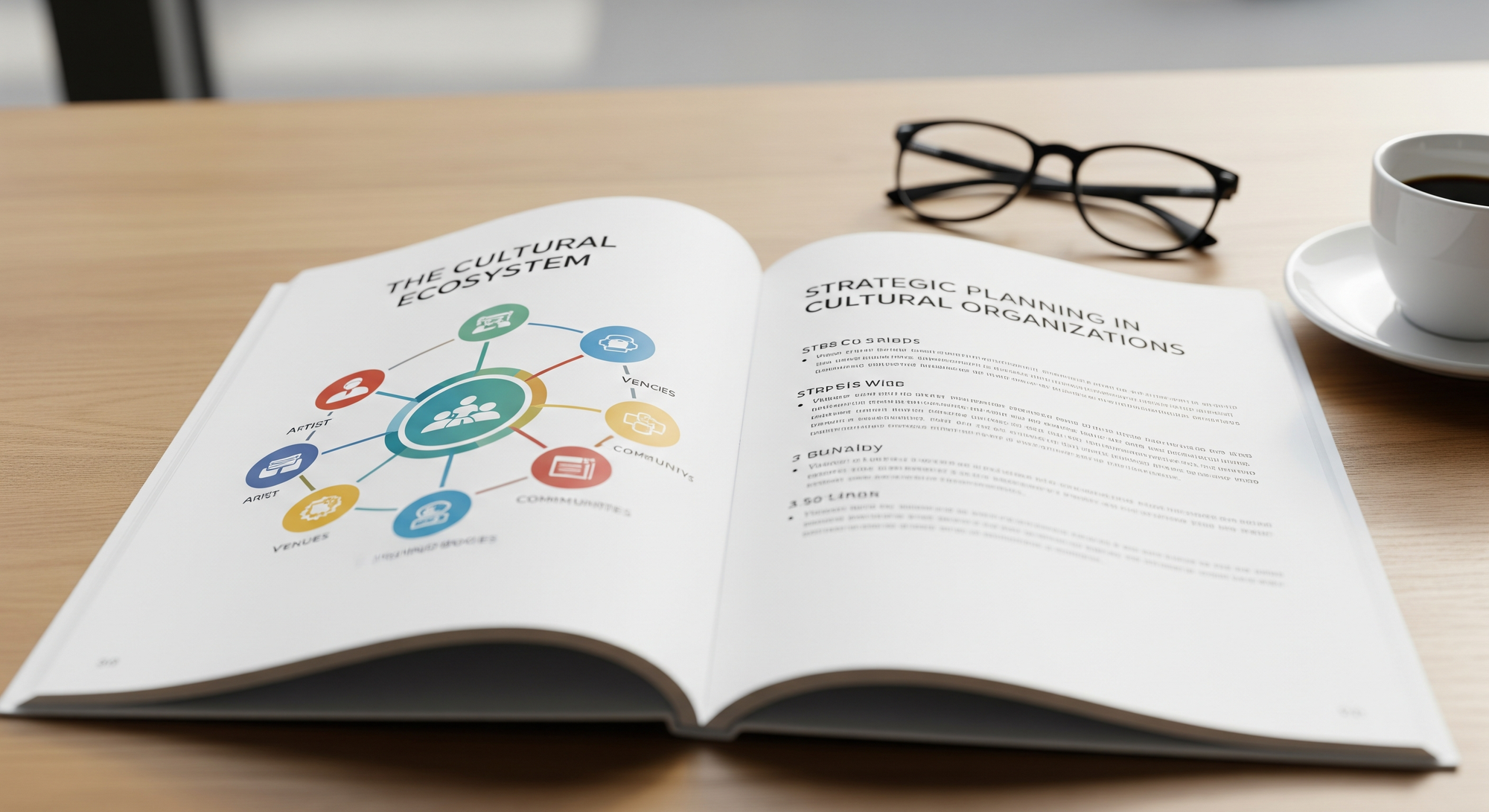
The Association Center for Projects Plovdiv (CPP) has published a free Cultural Management Manual developed as part of the School of Culture — an Erasmus+ Youth Exchange that took place in Plovdiv, Bulgaria in January 2026.The manual is available for free download and may be freely shared, adapted and reproduced under a Creative Commons Attribution 4.0 International licence (CC BY 4.0).
About the Manual
The School of Culture Cultural Management Manual is a practical guide for young people working in or aspiring to work in the cultural and creative sectors. It covers seven core areas of cultural management:
- Business and entrepreneurship in the cultural and creative sectors
- Project management
- Fundraising strategies
- Financial management and budgeting
- Marketing and branding
- Intellectual property rights
- Design thinking and cultural ecosystems
Each chapter combines practical frameworks and tools with real case studies drawn from the nine countries that participated in the exchange: Bulgaria, Spain, Italy, Romania, Hungary, Lithuania, Ukraine, Serbia and Greece. The case studies include real challenges faced by cultural organisations across Europe — from a theatre festival for children in Smederevo struggling with limited resources, to a volunteer association in Kaunas working to re-engage an inactive membership, to an abandoned rural building in southern Italy being reimagined as a European cultural hub.The manual does not assume prior knowledge of management or business. It is written for practitioners — people doing cultural work under real conditions, with limited time and resources, who need tools that are immediately applicable.
Background: The School of Culture Exchange
The manual grew out of the School of Culture Youth Exchange, funded under the Erasmus+ programme (KA152-YOU — Mobility of Young People). The exchange brought together 45 participants from nine countries for seven days of intensive non-formal learning at the Youth Centre in Plovdiv.Nine partner organisations co-designed and delivered the programme:
- CPP — Association Center for Projects Plovdiv, Bulgaria (lead)
- Cooperativa Sociale Immaginaria A R.L. Onlus, Italy
- Centre of Local Actions and Social Heritage (CLASH), Spain
- Prostir Molodi, Ukraine
- Asociatia Proiect 1200, Romania
- Savanorių asociacija "Kultūristai", Lithuania
- Omilos UNESCO Neon Thessalonikis, Greece
- Tett-Hely Ifjúsági Egyesület, Hungary
- PATOS, Serbia
Participants worked through case studies contributed by each partner organisation, reflecting real challenges in their respective national cultural contexts. The manual consolidates the knowledge and tools from those sessions into a reference document designed to remain useful beyond the project itself.
Why This Manual
The cultural and creative sectors employ approximately 11.1 million people across the European Union. Despite their scale and social importance, they remain structurally underfunded and particularly vulnerable to economic shocks — as the COVID-19 pandemic demonstrated, with job losses in the sector ranging from 5.7% to 10% across EU member states.Young people entering the cultural sector face a specific challenge: formal education systems in most European countries do not provide adequate training in cultural management. The gap is most pronounced in smaller cities and rural areas, where specialised education and professional networks are scarce.This manual is a response to that gap. It is not a comprehensive academic treatment of any topic — there are specialists and entire curricula for each of the seven chapters. What it offers is a grounded starting point: written with and for people who are managing cultural work without a management school background, navigating funding applications, contracts, audience development and organisational sustainability in real time.
Availability and Licence
The School of Culture Cultural Management Manual is published under a Creative Commons Attribution 4.0 International licence (CC BY 4.0). It may be freely reproduced, adapted and distributed for any purpose, including commercially, provided appropriate credit is given to the Association Center for Projects Plovdiv and the Erasmus+ programme.
Co-funded by the Erasmus+ Programme of the European Union. The European Commission's support for the production of this publication does not constitute an endorsement of the contents, which reflect the views only of the authors.Association Center for Projects Plovdiv (CPP) | OID: E10012033 | Plovdiv, Bulgaria